Luvenia Duckett (1906 – 2005)
July 11, 2011 § Leave a comment

Luvenia Duckett (1906 - 2005) with my neice Mary Earle.
about all the biscuits she had made for my mother for parties and receptions. She would just hang her head–tired of thinking about those biscuits. Once I tried to get her to let me videotape her making biscuits. She agreed but would place herself in front of the camera so you could not see her preparations. She would just laugh when I ask her to move. She and I were allies of sorts. We would save pieces the of white meat of the chicken for my dog. She would make a large biscuit for me that I could have later. She and I would sit in the pantry together when it thundered. I sat there with her because she was afraid of lightning. She recalled the time when she saw a lightning fireball come down the chimney, cross the room and go out a window. « Read the rest of this entry »
Just Like Family Gallery
June 30, 2011 § Leave a comment
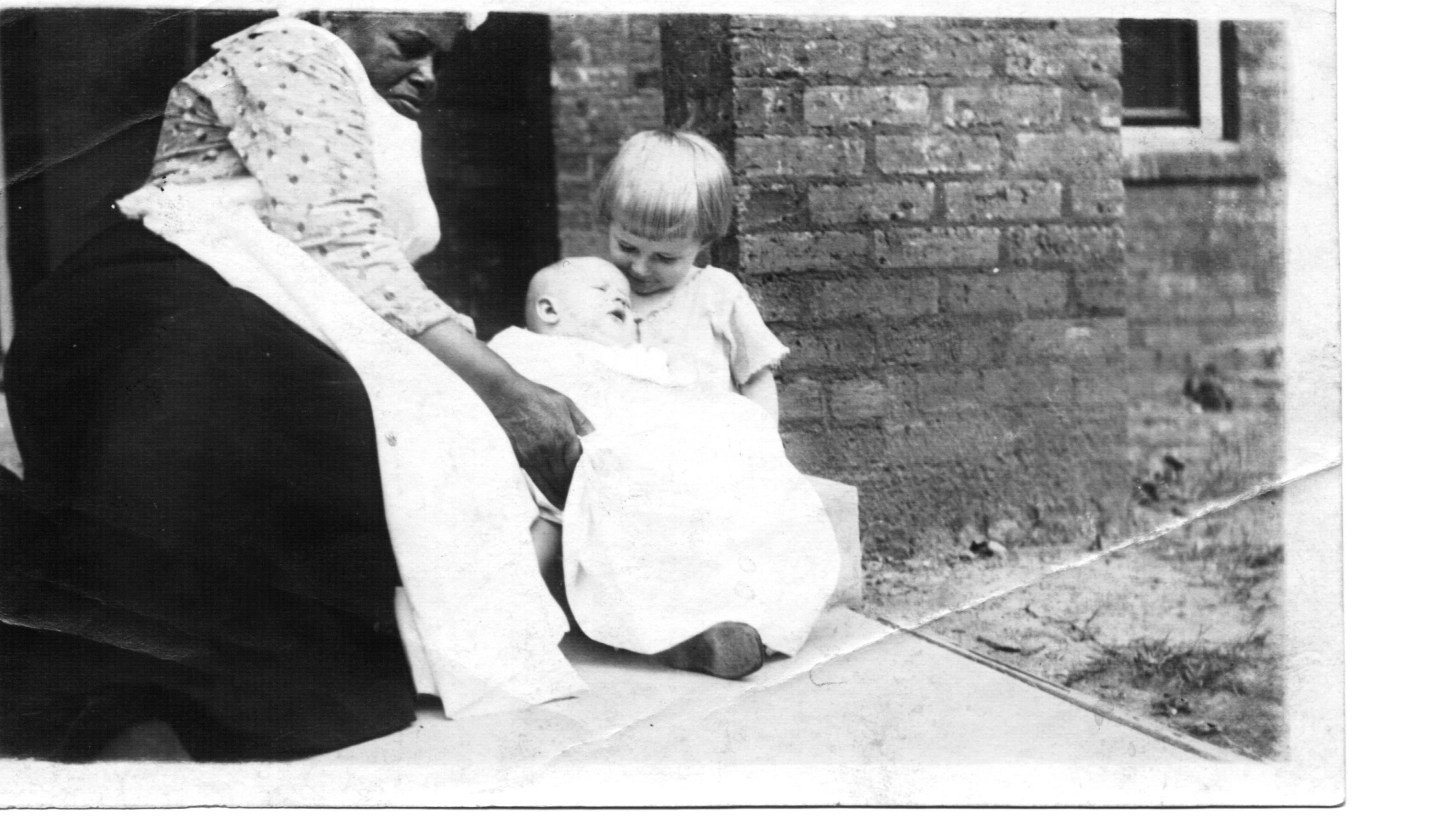
Unknown African American woman with my mother and uncle, ca. 1924.
The Nanny Project
June 30, 2011 § Leave a comment
 The exhibit that was mentioned in the previous post is called the Nanny Project by DH Cooper, a photographer who is a professor at the Art Institute of Charleston. Nanny Project is currently exhibited at the City Gallery in Charleston. Charlestonmag.com’s interview of the artist reveals that through “discarded photographs taken in the 1800s to the present of African-American nannies and the white children they helped raise, she examines the subjects, evaluates their social hierarchies, and then re-images the compositions, transferring the images to cloth, which she then embroiders and quilts. ‘By combining traditional crafts and manipulated photographs, DH Cooper questions the tradition and heightens the viewer’s awareness of contradictions that are still relevant today,” says co-curator Erin Glaze.’”
For more information about DH Cooper visit http://www.charlestonmag.com/charleston_magazine/feature/dh_cooper and her web site at www.dhcooper.com.
Introduction
June 6, 2011 § 8 Comments
WELCOME TO JUST LIKE FAMILY 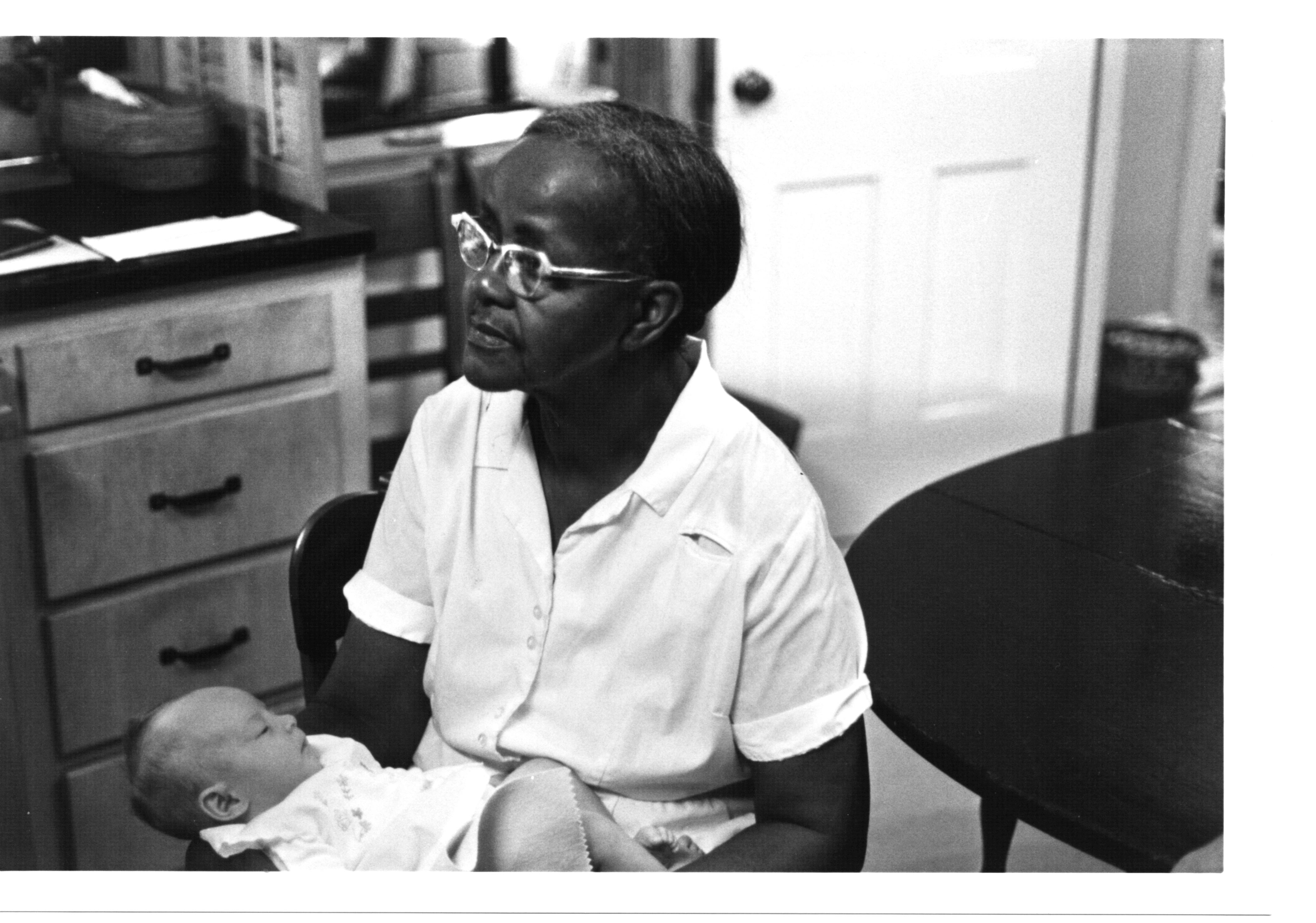
JUST LIKE FAMILY is a blog about African American women who raised white children in mid- to late-20th century—giving voice to a history and experience not often acknowledged in this country. This cultural fusion of black and white and the intimacy it suggests has undeniably shaped the lives of many in this country in complex ways that I think need to be explored. But how do we bear witness to such complexity from different points of view? With reader input and my own postings, we will form a purpose toward inclusiveness and healing that I hope will be enriched through our exploration.
 JUST LIKE FAMILY